


January 21, 2026
Brian Rehling, CFA, Head of Global Fixed Income Strategy
Mason Mendez, Investment Strategy Analyst
Tokenization — What investors need to know
Key takeaways
- Tokenization is rapidly emerging as a transformative innovation in financial technology. At its core, tokenization refers to the process of converting ownership rights of assets into digital tokens that exist on a blockchain.1
- These tokens serve as verifiable representations of ownership and can be traded or managed within a digital ecosystem. By leveraging blockchain’s transparency and immutability, tokenization has the potential to make investing more accessible, efficient, and inclusive, while also introducing new opportunities for diversification and liquidity.
What is tokenization?
Tokenization converts ownership rights of real-world assets into digital tokens on a blockchain or distributed ledger. Tokenization can be used to break down a valuable asset into smaller digital units, called tokens. These tokens can represent fractional ownership of the underlying asset, whether it is tangible (such as real estate, fine art, or commodities) or intangible (like intellectual property, copyrights, or digital collectibles). Instead of purchasing an entire property or a multi-million-dollar painting, investors can buy tokens that represent a fraction of that asset. This fractional ownership model significantly lowers the barrier to entry, allowing individuals to participate in markets that were once reserved for institutional investors or ultra-high-net-worth individuals.2
The concept is simple but powerful: by dividing assets into smaller, tradable units, tokenization increases access to potential wealth-building opportunities. It enables investors to start small, diversify their portfolios, and gain exposure to high-value markets without committing large sums of money.
How tokenization works
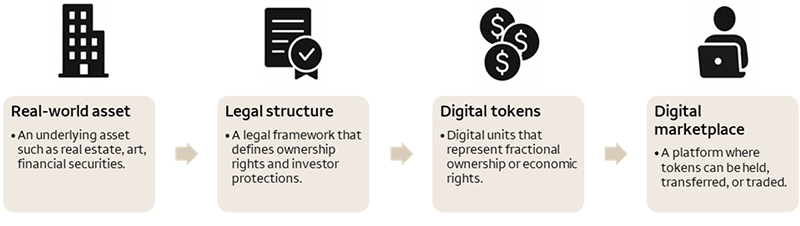
The process of tokenizing an asset begins when the asset owner uses or partners with a technology platform to create digital tokens. The token can be linked to the underlying asset through a contractual agreement that specifies enforceable terms.3 Once issued, these tokens can be bought, sold, or traded on digital marketplaces that specialize in tokenized assets. The ownership of the token is then transferred, and by extension the asset—or the portion of the asset that the token represents—transfers to the new owner. Due to the evolving nature of digital-asset regulations and tokenization, it is crucial that investors vet any token to ensure that legal and ownership rights are being transferred in line with their expectations.
This system introduces flexibility and efficiency into markets that have traditionally been illiquid.4 For example, selling a piece of real estate or a rare painting can take months and involve significant transaction costs. Tokenization changes that dynamic by enabling fractional ownership and faster transactions, potentially at lower costs. Investors can buy and sell tokens almost instantly, 24 hours a day and seven days a week5, potentially creating liquidity in markets that historically lacked it. This capability reduces friction and costs and opens the door to cross-border investment opportunities, creating a truly global marketplace for tokenized assets.
Blockchain: The foundation of tokenization6
Blockchain technology provides the infrastructure that makes tokenization possible. Acting as a decentralized ledger, blockchain ensures that ownership records are transparent, immutable, and verifiable.7 Every transaction involving a token is recorded on the blockchain, reducing the risk of fraud and eliminating the need for traditional intermediaries.
While blockchain establishes the foundation for secure and efficient tokenized markets, additional tools are needed to ensure stability and usability in everyday transactions. This is where stablecoins play an important role.
Stablecoins are digital assets pegged to stable values, like the U.S. dollar. By using stablecoins for settling transactions, investors potentially avoid the volatility associated with cryptocurrencies such as Bitcoin or Ethereum.8 This stability helps bridge the gap between traditional finance and digital assets, making the buying and selling of tokenized assets more practical and appealing for mainstream investors.
Real-world applications
Tokenization is not just a theoretical concept; it is already being applied across multiple industries. In real estate, platforms like HoneyBricks allow investors to purchase tokens representing fractional ownership in rental properties.9 For example, an investor might spend $100 to buy a token linked to a pre-vetted multifamily apartment in New Orleans and receive a proportional share of rental income, distributed automatically through blockchain.
The art world has also embraced tokenization. Companies like Masterworks enable investors to buy tokens representing shares in famous artworks, such as pieces by Van Gogh.10 When the artwork appreciates and is eventually sold, token holders share in the profits. This approach transforms an industry that was once highly exclusive into one that is accessible to a broader audience.
Even traditional financial instruments like government bonds are being tokenized.11 Investors can purchase tokens backed by bonds and earn interest payments, with settlement in stablecoins ensuring consistent value. These examples illustrate how tokenization is expanding beyond niche markets and becoming a mainstream financial innovation.
Summary of potential benefits
The potential advantages of tokenization seem compelling. First and foremost, it increases accessibility by allowing investors to participate in high-value markets with minimal capital.12 This democratization of investment opportunities can help individuals build more diversified portfolios and reduce concentration risk.
Tokenization also enhances liquidity.13 Unlike physical assets, which can take months to sell, tokens can be traded quickly and efficiently. This liquidity makes it easier for investors to adjust their portfolios in response to market conditions.
Transparency is another key benefit. Because all transactions are recorded on a blockchain, the risk of errors or fraud is reduced.14 Additionally, tokenization introduces cost savings and speed, enabling 24/7 global trading without the need for intermediaries.
Risks and challenges
Despite its potential benefits, tokenization is not without risks. Market volatility can influence the value of tokenized assets, particularly when transactions are denominated or settled using cryptocurrencies. Many cryptocurrencies are not backed by central banks or tangible assets, and their prices may fluctuate significantly over short periods of time. As a result, volatility in the underlying cryptocurrency markets may introduce additional variability into token prices and transaction outcomes.
Some tokenized platforms seek to reduce this exposure by using stablecoins, which are designed to maintain a relatively stable value by being pegged to assets such as the U.S. dollar.15 While stablecoins may help limit the direct impact of cryptocurrency price swings, they are not risk free and rely on the issuer’s ability to maintain the peg, manage reserves, and operate within evolving regulatory standards. Disruptions to these mechanisms could affect the stability or usability of stablecoins in tokenized transactions.
Security concerns also exist within the tokenization ecosystem. While blockchain networks themselves are designed to be highly secure and resistant to tampering, risks can arise at other points in the infrastructure. Platforms that issue, custody, or facilitate the trading of tokenized assets may be exposed to cybersecurity threats such as hacking, phishing attacks, or operational failures, particularly if controls and safeguards are insufficient. Additionally, vulnerabilities in smart contracts, software bugs, or poor key management practices can lead to unintended asset losses or disruptions in access. These risks underscore the importance of robust governance, strong cybersecurity practices, and independent audits. Investors should conduct thorough due diligence to confirm that tokens are properly backed by real assets and that the platforms they use employ reliable security, custody, and oversight measures.
Regulatory uncertainty remains another important consideration. Governments and regulators across jurisdictions continue to develop and refine rules governing digital assets, including cryptocurrencies, stablecoins, and tokenized products. Changes in regulation may affect taxation, reporting requirements, investor eligibility, custody practices, or the availability of certain tokenized offerings. These regulatory developments could influence market adoption, liquidity, and the overall risk profile of tokenization.
The future of tokenization
Looking ahead, tokenization has the potential to reshape the investment landscape by making diverse assets more accessible, inclusive, and liquid. As blockchain technology continues to evolve and regulatory frameworks become clearer, tokenization could become a cornerstone of modern finance. By combining security, efficiency, and flexibility, tokenization offers a glimpse into a future where fractional ownership of everything — from real estate to fine art — is commonplace.
1 Blockchains are decentralized ledgers secured by cryptography that record transactions across a network of computers in a secure and transparent manner. For a complete introduction please see Wells Fargo Investment Institute’s report, “Blockchain technology basics,” November 13, 2025.
2 “How will asset tokenization transform the future of finance,” World Economic Forum, August 8, 2025.
3 “Tokenization of real-world assets: opportunities, challenges, and the path ahead,” Katten, August 7, 2025.
4 “Tokenization of real-world assets: opportunities, challenges, and the path ahead,” Katten, August 7, 2025.
5 “Why tokenizing real world assets is the future of finance: key advantages explained,” Mantrachain, December 23, 2024.
6 “Blockchain technology basics,” Wells Fargo Investment Institute, November 13, 2025.
7 “Blockchain technology basics,” Well Fargo Investment Institute, November 13, 2025.
8 “Stablecoins: an introduction,” Wells Fargo Investment Institute, October 3, 2025.
9 Honeybricks.com, as of January 8, 2026.
10 Masterworks.com, as of January 2, 2026.
11 “Tokenized bonds explained,” Chainlink, December 10, 2025.
12 “How will asset tokenization transform the future of finance,” World Economic Forum, August 8, 2025.
13 “What is asset tokenization?” Mantrachain, September 16, 2024.
14 “Blockchain technology basics,” Well Fargo Investment Institute, November 13, 2025.
15 “Stablecoins: an introduction,” Wells Fargo Investment Institute, October 3, 2025.
Risks Considerations
This document is a general communication being provided for educational purposes only. It is educational in nature and not designed to be taken as advice or a recommendation for any specific investment product or strategy. Any examples used are for illustration purposes only. This material does not contain sufficient information to support an investment decision and it should not be relied upon by you in evaluating the merits of investing in any securities or products. Any forecasts, figures, opinions or investment techniques and strategies set out are for information purposes only, based on certain assumptions and current market conditions and are subject to change without prior notice. All information presented herein is considered to be accurate at the time of production, but no warranty of accuracy is given and no liability in respect of any error or omission is accepted. It should be noted that investment involves risks, the value of investments and the income from them may fluctuate in accordance with market conditions and taxation agreements and investors may not get back the full amount invested.
Digital assets are not a physical currency, nor legal tender. Investors must have the financial ability, sophistication/experience and willingness to bear the risks of an investment, and a potential total loss of their investment. An investor could lose all or a substantial portion of his/her investment. Digital assets have limited operating history or performance. Digital Assets are sometimes exchanged for U.S. dollars or other currencies around the world, but they are not backed or supported by any government or central bank. Their value is completely derived by market forces of supply and demand, and they are more volatile than traditional fiat currencies.
Digital assets are a speculative investment and involves a high degree of risk. Investors must have the financial ability, sophistication/experience and willingness to bear the risks of an investment, and a potential total loss of their investment. An investor could lose all or a substantial portion of his/her investment. Cryptocurrency has limited operating history or performance. Fees and expenses associated with a cryptocurrency investment may be substantial. Cryptocurrencies are sometimes exchanged for U.S. dollars or other currencies around the world, but they are not backed or supported by any government or central bank. Their value is completely derived by market forces of supply and demand, and they are more volatile than traditional fiat currencies.
General Disclosures
Global Investment Strategy (GIS) is a division of Wells Fargo Investment Institute, Inc. (WFII). WFII is a registered investment adviser and wholly owned subsidiary of Wells Fargo Bank, N.A., a bank affiliate of Wells Fargo & Company.
The information in this report was prepared by Global Investment Strategy. Opinions represent GIS’ opinion as of the date of this report and are for general information purposes only and are not intended to predict or guarantee the future performance of any individual security, market sector or the markets generally. GIS does not undertake to advise you of any change in its opinions or the information contained in this report. Wells Fargo & Company affiliates may issue reports or have opinions that are inconsistent with, and reach different conclusions from, this report.
The information contained herein constitutes general information and is not directed to, designed for, or individually tailored to, any particular investor or potential investor. This report is not intended to be a client-specific suitability or best interest analysis or recommendation, an offer to participate in any investment, or a recommendation to buy, hold or sell securities. Do not use this report as the sole basis for investment decisions. Do not select an asset class or investment product based on performance alone. Consider all relevant information, including your existing portfolio, investment objectives, risk tolerance, liquidity needs and investment time horizon. The material contained herein has been prepared from sources and data we believe to be reliable but we make no guarantee to its accuracy or completeness.
Wells Fargo Advisors is registered with the U.S. Securities and Exchange Commission and the Financial Industry Regulatory Authority, but is not licensed or registered with any financial services regulatory authority outside of the U.S. Non-U.S. residents who maintain U.S.-based financial services account(s) with Wells Fargo Advisors may not be afforded certain protections conferred by legislation and regulations in their country of residence in respect of any investments, investment transactions or communications made with Wells Fargo Advisors.
Wells Fargo Advisors is a trade name used by Wells Fargo Clearing Services, LLC and Wells Fargo Advisors Financial Network, LLC, Members SIPC, separate registered broker-dealers and non-bank affiliates of Wells Fargo & Company.